There was a practical reason why I bought this new computer. It wasn't just to play "Doom 3" and "The Sims 2," or to acquire a status symbol, or to fulfill whatever bizarre ideas I had about my iPod a few months ago.
I bought this computer so I could expand my music-making capabilities, which were tightly constrained on the old eMac. Tiny screen, slow processor, 60GB hard drive, ancient operating system, USB 1.0...there just wasn't enough I could DO with it anymore, without squinting and watching the poor thing shudder and cry.
So I bought my gorgeous iMac, which suffers none of those old limitations except for one thing: my copy of Logic Audio 6 wouldn't work on it. Damn. At least there was "Doom 3."
But today, with my finances beginning to stabilize, I took my next and second-biggest step: I bought Logic Pro 8.
I sort of wonder how much I needed the Pro version, over the comparatively cheaper "Express." I have no intention of using the six DVDs of loops and "Jam Packs," which I consider to be tools for cheaters. I'll never use MainStage because I never play live, and as far as I know the effects plug-ins and soft synths are pretty much the same in both the Express and Pro versions.
Pro DOES come with a CD burning tool which looks useful, however, and if I ever want to record in surround sound or score a movie...well, I can now.
Most impressive about the Pro package is the enormous, sturdy box, which all but affirms your suspicion that You Are In Fact A Worthwhile Person. The manual for the effects alone is heavy enough to topple my cat, and the actual User Guide is over 1000 pages long. Fortunately, having launched the program and loaded in a few old projects, it looks like the interface is much the same as version 6, only beautifully integrated in a way that requires a nice big screen. No more F9 to seek and grab the six windows that are open in the background.
I'm very excited about the busses and the sampler. I can't wait to really use it...
...but the old eMac with Logic 6 has got a few more months to go, since I don't actually have a MIDI interface for this computer, and I may need to re-purchase my old plug-ins ("iDrum," "Pluggo," and "Mode") to get my old projects migrated over. More RAM would be nice, as well as a breakout box...and a hardware drum machine...and one of those fiddly USB control boxes with lots of knobs and sliders.
Anyway, hurrah!
Friday, October 31, 2008

Thursday, October 30, 2008
Domestic Drag Show: "Macavity" By Sarah Brightman
The newest (and longest) Domestic Drag Show is ready for viewing...if you dare!
This has always been a difficult song to do. Despite the somewhat arbitrary and easily forgettable "you/they" lyric switches, it simply has a weird tempo between "burlesque" and "big band." I don't know whether to grind or prance. And coupled with the relatively snoozy running time (3:45 in its edited version) I just don't do this live anymore.
I think all this awkwardness comes out in the video, filmed on two separate nights several weeks apart, including "second unit" hands. Fortunately Zsa Zsa consented to appear as the nefarious, gender-switching "Macavity" himself.
If anybody wants a signed, one-of-a-kind "Macavity" portrait, it's still nailed to my wall.
This has always been a difficult song to do. Despite the somewhat arbitrary and easily forgettable "you/they" lyric switches, it simply has a weird tempo between "burlesque" and "big band." I don't know whether to grind or prance. And coupled with the relatively snoozy running time (3:45 in its edited version) I just don't do this live anymore.
I think all this awkwardness comes out in the video, filmed on two separate nights several weeks apart, including "second unit" hands. Fortunately Zsa Zsa consented to appear as the nefarious, gender-switching "Macavity" himself.
If anybody wants a signed, one-of-a-kind "Macavity" portrait, it's still nailed to my wall.
Friday, October 24, 2008
I'd Buy Anything By...Harry Nilsson
When you're a kid you get particular joy out of dirrrrrty novelty songs. At an early, impressionable age I was exposed not only to Donovan's "The Intergalactic Laxative," but also to two little tunes by Harry Nilsson: "I'd Rather Be Dead" (sung by a bunch of senior citizens who'd "rather be dead than wet my bed") and the high-powered rocker "You're Breakin' My Heart" ("...so f*ck you.")
There was a certain joy that came from singing nasty songs that were part of my parent's record collection. How could they discipline me when they'd bought those albums themselves? But as I grew older I started listening to the OTHER songs on those Harry Nilsson albums, and I realized that the world didn't view him as the writer of cheap novelties; he was a troubled genius who hit as often as he missed, who swam in garbage and fished up jewels, who went on a mad drinking binge with John Lennon and was ejected from a bar for heckling The Smothers Brothers.
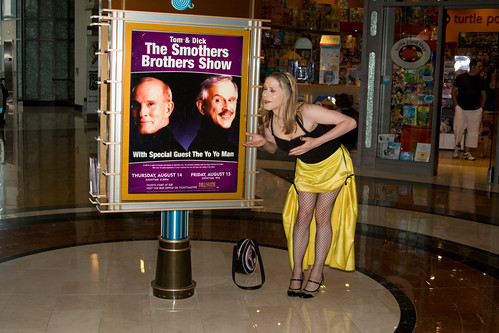
A man after my own heart.
My favourite Harry Nilsson song is "Spaceman." It encompasses every element of the '70s music I grew up with: pretentious orchestra, soaring melodies, thumping drums, and over-the-top production. I distinctly remember hearing the vocal effect during the "round and around" portion and realizing -- for the first time -- that music could contain UNNATURAL sounds. Thus began my love affair with the phaser.
Wow, he could sing. Wow, he could write a song. Here's a downbeat performance of "1941," which ends with all the pathetic oddness you'd expect from the man.
It seems that Nilsson is LEAST known for the songs he performed and wrote himself. His most famous song is probably "Without You," which he didn't write (and which Mariah Carey butchered in a most predictable way), and other bands have gone on to make hits out of his own songs which failed to chart. There aren't a lot of convenient clips of Nilsson's later work available on YouTube, so instead I'll show you the most wonderful rendition of a Nilsson song I can think of: it's Davey Jones performing "Daddy's Song" (from the Monkees movie "Head," which is brilliant and deserves its own post). Ten points and a smooch if you can tell me who he's dancing with.
Yes, it's Toni Basil. THAT Toni Basil.
Anyway, back to Harry Nilsson. The fact is that Nilsson made some crappy albums; he was messed up and unrestrained and his bosses didn't know how to market him. And yet somehow his troughs accentuate his high points; to love Nilsson it helps to know a bit about him, and what he could AND couldn't do.
Albums to buy: The two-disc reissue of his first two albums ("Pandemonium Shadow Show" and "Aerial Ballet") plus the world's first remix album ("Aerial Pandemonium Ballet") is pure, uncut, enthusiastic young spunk. "Nilsson Schmilsson" gives you the slightly drug-addled, crazier Nilsson (and "Coconut"). Albums to avoid: I'm not a fan of "A Little Touch of Schmilsson In The Night," and I've never picked up those albums that have been widely panned because I've never seen them for sale. For fans only: I wish I knew, because whatever it is I'd buy it.
There was a certain joy that came from singing nasty songs that were part of my parent's record collection. How could they discipline me when they'd bought those albums themselves? But as I grew older I started listening to the OTHER songs on those Harry Nilsson albums, and I realized that the world didn't view him as the writer of cheap novelties; he was a troubled genius who hit as often as he missed, who swam in garbage and fished up jewels, who went on a mad drinking binge with John Lennon and was ejected from a bar for heckling The Smothers Brothers.
A man after my own heart.
My favourite Harry Nilsson song is "Spaceman." It encompasses every element of the '70s music I grew up with: pretentious orchestra, soaring melodies, thumping drums, and over-the-top production. I distinctly remember hearing the vocal effect during the "round and around" portion and realizing -- for the first time -- that music could contain UNNATURAL sounds. Thus began my love affair with the phaser.
Wow, he could sing. Wow, he could write a song. Here's a downbeat performance of "1941," which ends with all the pathetic oddness you'd expect from the man.
It seems that Nilsson is LEAST known for the songs he performed and wrote himself. His most famous song is probably "Without You," which he didn't write (and which Mariah Carey butchered in a most predictable way), and other bands have gone on to make hits out of his own songs which failed to chart. There aren't a lot of convenient clips of Nilsson's later work available on YouTube, so instead I'll show you the most wonderful rendition of a Nilsson song I can think of: it's Davey Jones performing "Daddy's Song" (from the Monkees movie "Head," which is brilliant and deserves its own post). Ten points and a smooch if you can tell me who he's dancing with.
Yes, it's Toni Basil. THAT Toni Basil.
Anyway, back to Harry Nilsson. The fact is that Nilsson made some crappy albums; he was messed up and unrestrained and his bosses didn't know how to market him. And yet somehow his troughs accentuate his high points; to love Nilsson it helps to know a bit about him, and what he could AND couldn't do.
Albums to buy: The two-disc reissue of his first two albums ("Pandemonium Shadow Show" and "Aerial Ballet") plus the world's first remix album ("Aerial Pandemonium Ballet") is pure, uncut, enthusiastic young spunk. "Nilsson Schmilsson" gives you the slightly drug-addled, crazier Nilsson (and "Coconut"). Albums to avoid: I'm not a fan of "A Little Touch of Schmilsson In The Night," and I've never picked up those albums that have been widely panned because I've never seen them for sale. For fans only: I wish I knew, because whatever it is I'd buy it.
Liveblogging My Grandfather's Tapes II
Continuing the liveblogging, because I know you're curious how that wiener thing ended up.
This "wiener deal" caused a tightening of tour restrictions...wouldn't let tourists near chicken or wiener processing, then wouldn't let them in the beef kill or the pork kill. Tours kept getting cut down, both in volume and number.
He stopped taking tours two years ago. He was "senior man" and felt that other and younger fellows might be better at it. He did the tours for thirteen years. He started at Schneider's in 1934 and was still doing tours in 1989, well over fifty years with the company. They have a retiree's travel club. A woman who started at Schneider's when he did suggested the travel club after retirement, have been doing it for twenty years...have several trips on the go.
Trips to Alexandria, New York. A ten-day trip to the Ozarks, one to Toronto, one through the Welland Canal, one to the Shaw Festival. So he's still involved with Schneider's. They used to rent their own busses but the costs were too high, now go through a travel agent.
INTERVIEWER: I know that you went to PEI during World War Two. Tell me more.
He went to London to enlist, but he and his brother were told to wait for their call. He got his call in August 1942, got into the service in November or December. He went into the Air Force, his brother was in the Army. He went to a camp near Montreal. Went to the Toronto Hunt Club for initial training, was then sent to Jarvis for further training, also LINK trainer, where he "washed out." He didn't have the physical qualities necessary.
The LINK trainer was a machine similar to flying. Just an imitation. Just barely the cockpit. There was scenery around you and you had the horizon, what it was was a simulated aircraft flight. He couldn't judge between the aircraft and the ground so they washed him out. He was finished.
So he remustered to aeroengines (ground crew), he typed wills at the Toronto manning pool for troops who were enlisting, this was at the sheep pen in the Exhibition grounds. Then he went to Galt for the aeroengine training school, in some of the old factory buildings down there. Then was shipped to St. Thomas, just a holding depot for postings, waiting for his assignment, continued marching and was held in barracks.
Then was posted to Moose Jaw for four days -- on ground crew, out on the airstrip. Would warm up planes in the morning, test everything. It was a bombing and gunnery school. An aircraft would carry two fellows, would drag a flag on a cable from behind. The fellows in another aircraft would shoot at the flag and record the results. They also dropped imitation explosives, fly over targets. A fellow in a pigeonhole would record how the bombing run went.
Then he was posted to Prince Edward Island. Two stations were there: Summerside (surveillance for submarines) and Mount Pleasant (also bombing and gunnery school). Was there from June 1944 to June 1945 with Rita (his wife). Had two rooms, four families living in one house, had a daughter (Sharon) just a year and a half old.
The armistice was signed and he was sent back to Ottawa until his discharge. Got it in Toronto in October 1945 on the Exhibition grounds. He was never sent overseas, possibly because he was married and had a child, and was also thirty. They had kids, 19, 20, "sharp as tacks, and, you might say, champing at the bit." He was on an overseas draft but they took him off. So he ended up in PEI, not in a war zone.
INTERVIEWER: Were there accidents during training?
Planes did go down, he was on guard duty on occasions when two went down. A seaplane crashed on an Ottawa roof near Hull, he was sent out to guard the plane and make sure it wasn't tampered with. At Mount Pleasant a plane went down and he guarded it for a week. To keep everybody away, civilians, air force people, until investigators could determine what happened.
Came back home in 1945. He was glad to get home. Then he went back to Schneider's. His job was held, and the plant treated the soldiers well. They made up a monthly food box that was sent to every worker in the service. The boxes contained toffee, cigarettes, canned butter, cookies, biscuits, summer sausage, canned meat. Also mailed overseas. Clarence Heller was in charge of the department that oversaw that operation.
It was a good place to work. There weren't too many people suffered, and if they did it was their own fault. J.M. (the founder) knew the old originals in the plant and he'd go out and visit them. Fred was quiet, more the businessman. Norm was everybody's friend, would ask people's opinion of things.
INTERVIEWER: Who were the old-timers you started there with?
When he started, a lot of the original employees were there. William Rohleder was the fellow that J. M. brought over as the sausage maker. "He was big, fat, German fellow." Jolly and robust. He was retired by that time. When J.M. started he only knew how to make pork sausage, so he brought in Rohleder. Wanted to branch out. Rohleder was practially a partner, probably had some money in the business when he retired.
The Radke brothers. Oscar worked in the cook room, Dutch loaf was roasted at that time. Oscar ended up in catering, making roast loaves and roast tails, had a special recipe for potato salad. Harry Radke was a "pig-sticker." "In other words, he stuck he hogs."
Gus Hagerman was head of the cook room, he might have invented the Dutch loaf. The Dutch loaf is a baked liver loaf, has a liver flavour to it. It's still made. J. M. was around. Freddy Maier worked in the office, did bookkeeping. Fred Schneider was head bookkeeper, in charge of finance. Norm Schneider was a mechanic, factory superintendent, also very quality-minded.
Edgar Gimble was cashier, one of the old originals.
INTERVIEWER: Thanks to both of you!
GRANDMA: I've heard things too, that I've never heard!
This "wiener deal" caused a tightening of tour restrictions...wouldn't let tourists near chicken or wiener processing, then wouldn't let them in the beef kill or the pork kill. Tours kept getting cut down, both in volume and number.
He stopped taking tours two years ago. He was "senior man" and felt that other and younger fellows might be better at it. He did the tours for thirteen years. He started at Schneider's in 1934 and was still doing tours in 1989, well over fifty years with the company. They have a retiree's travel club. A woman who started at Schneider's when he did suggested the travel club after retirement, have been doing it for twenty years...have several trips on the go.
Trips to Alexandria, New York. A ten-day trip to the Ozarks, one to Toronto, one through the Welland Canal, one to the Shaw Festival. So he's still involved with Schneider's. They used to rent their own busses but the costs were too high, now go through a travel agent.
INTERVIEWER: I know that you went to PEI during World War Two. Tell me more.
He went to London to enlist, but he and his brother were told to wait for their call. He got his call in August 1942, got into the service in November or December. He went into the Air Force, his brother was in the Army. He went to a camp near Montreal. Went to the Toronto Hunt Club for initial training, was then sent to Jarvis for further training, also LINK trainer, where he "washed out." He didn't have the physical qualities necessary.
The LINK trainer was a machine similar to flying. Just an imitation. Just barely the cockpit. There was scenery around you and you had the horizon, what it was was a simulated aircraft flight. He couldn't judge between the aircraft and the ground so they washed him out. He was finished.
So he remustered to aeroengines (ground crew), he typed wills at the Toronto manning pool for troops who were enlisting, this was at the sheep pen in the Exhibition grounds. Then he went to Galt for the aeroengine training school, in some of the old factory buildings down there. Then was shipped to St. Thomas, just a holding depot for postings, waiting for his assignment, continued marching and was held in barracks.
Then was posted to Moose Jaw for four days -- on ground crew, out on the airstrip. Would warm up planes in the morning, test everything. It was a bombing and gunnery school. An aircraft would carry two fellows, would drag a flag on a cable from behind. The fellows in another aircraft would shoot at the flag and record the results. They also dropped imitation explosives, fly over targets. A fellow in a pigeonhole would record how the bombing run went.
Then he was posted to Prince Edward Island. Two stations were there: Summerside (surveillance for submarines) and Mount Pleasant (also bombing and gunnery school). Was there from June 1944 to June 1945 with Rita (his wife). Had two rooms, four families living in one house, had a daughter (Sharon) just a year and a half old.
The armistice was signed and he was sent back to Ottawa until his discharge. Got it in Toronto in October 1945 on the Exhibition grounds. He was never sent overseas, possibly because he was married and had a child, and was also thirty. They had kids, 19, 20, "sharp as tacks, and, you might say, champing at the bit." He was on an overseas draft but they took him off. So he ended up in PEI, not in a war zone.
INTERVIEWER: Were there accidents during training?
Planes did go down, he was on guard duty on occasions when two went down. A seaplane crashed on an Ottawa roof near Hull, he was sent out to guard the plane and make sure it wasn't tampered with. At Mount Pleasant a plane went down and he guarded it for a week. To keep everybody away, civilians, air force people, until investigators could determine what happened.
Came back home in 1945. He was glad to get home. Then he went back to Schneider's. His job was held, and the plant treated the soldiers well. They made up a monthly food box that was sent to every worker in the service. The boxes contained toffee, cigarettes, canned butter, cookies, biscuits, summer sausage, canned meat. Also mailed overseas. Clarence Heller was in charge of the department that oversaw that operation.
It was a good place to work. There weren't too many people suffered, and if they did it was their own fault. J.M. (the founder) knew the old originals in the plant and he'd go out and visit them. Fred was quiet, more the businessman. Norm was everybody's friend, would ask people's opinion of things.
INTERVIEWER: Who were the old-timers you started there with?
When he started, a lot of the original employees were there. William Rohleder was the fellow that J. M. brought over as the sausage maker. "He was big, fat, German fellow." Jolly and robust. He was retired by that time. When J.M. started he only knew how to make pork sausage, so he brought in Rohleder. Wanted to branch out. Rohleder was practially a partner, probably had some money in the business when he retired.
The Radke brothers. Oscar worked in the cook room, Dutch loaf was roasted at that time. Oscar ended up in catering, making roast loaves and roast tails, had a special recipe for potato salad. Harry Radke was a "pig-sticker." "In other words, he stuck he hogs."
Gus Hagerman was head of the cook room, he might have invented the Dutch loaf. The Dutch loaf is a baked liver loaf, has a liver flavour to it. It's still made. J. M. was around. Freddy Maier worked in the office, did bookkeeping. Fred Schneider was head bookkeeper, in charge of finance. Norm Schneider was a mechanic, factory superintendent, also very quality-minded.
Edgar Gimble was cashier, one of the old originals.
INTERVIEWER: Thanks to both of you!
GRANDMA: I've heard things too, that I've never heard!
Liveblogging My Grandfather's Tapes I
I'm digitizing 4 1/2 hours of my grandfather's taped interviews, and I'm doing it in a very short period of time. In order to keep myself busy (there's only so much solitaire you can play in one sitting), I came upon the revolutionary idea of LIVEBLOGGING my grandfather's interview.
Live, as in originally recorded on July 15, 1992.
The interview was apparently taped in their back kitchen, with my grandmother occasionally popping in. The interviewer was Frances Hoffman.
At the three hour mark he is explaining in meticulous detail the way the Schneider's factory and merchandising operated while he was there. He worked at Schneider's almost all his life, and continued to deal with the company long after his retirement.
There was a plant in Ayr for fried chicken and meat patties. It didn't do the killing, only the frying. When the fried chicken business caught on they started to buy raw product from other processors. Schneider's still had a chicken kill, but not sufficient chicken for fried chicken. This was for bucket chicken, nuggets, chicken fingers. Recent products since chicken "came into its own."
Schneider's also bought Bradley Brothers in Toronto. They went bankrupt, so Schneider's bought them out. They were mostly in hotel institutional business. They sold a ready made product, and Schneider's was already making the same products. If they hadn't bought it, somebody else would have, some "cut-rate operation." Schneider's ran it separately for a while -- Bradley's trucks would go into restaurants with a certain cut, then Schneider's trucks would go in an hour later with a different cut -- but since this was a hassle they combined the operations.
That plant was set up for Hotel Restaurant Institution, not sausage or cold cuts. Schneider's also made it a "patty plant" with new equipment, and therefore made all the meat patties. The hamburger and patty business increased to the point where the plant could survive. These were steakettes, hamburger patties, and special things for 7-11, Harvey's, Burger King, Dairy Queen. "Patty contracts."
In Kitchener they used to have a "beef boning" operation, would cut up, debone, and roll beef here. In order to have a sausage plant you needed both a pork and a beef supply (to make something like summer sausage). But were never large enough as a beef operator to compete with bigger companies. Became too costly and wiped out the beef killing and boning lines.
Now (1992) they buy boneless cuts from a firm called Carlisle in Calgary. They had over 100 people in beef kill so this was a big change. But they still butcher hogs there. In 1990 they had two hog kill shifts. A company called Hoffman was just cutting up hogs and sending them to Toronto for processing, ten to twelve thousand hogs away. But Schneider's killed 6000 hogs a day, purchased through the stockyard marketing board. That's the only way you can buy them, can't buy direct from farmers.
Now just killing 3000 to 3500 a day while the demand for red (raw) meat has fallen off with chicken becoming more popular. So Schneider's got into the hamburger business more, and dishes like lasagna, noodles, pasta. But they don't make those anymore.
He was in the shipping office when the Oktoberfest sausage hit the market, didn't affect much except just around Oktoberfest. It was just to be sold during the Oktoberfest parade, but Norris' bakery had a market for Oktoberfest sausage all year, and others too. Line was drawn at supermarket sales, however. They didn't make one-pound packages except for Oktoberfest.
Other than being in the shipping office, he also worked in Catering. The Schneider's catering was limited to roast ribs, roast tails, cabbage salad, scallop potatoes, pickles, cheese, and dessert (mostly pie, which they bought from Norris'). Also different fundraising organizations like the Stratford Hockey Club, who came twice a year to get catered meal for fundraising. Also had roast beef and roast pork (for a while) and roast turkey. But the only company they roasted turkeys for was for Pruitt's near the end.
He took care of catering orders. Goodrich's foreman's club ordered roast beef and roast tails. He also sold byproducts -- meat meal, bonemeal -- to feed companies. Would be mixed with chopped grain and be a supplement for animal feed. Feathermeal was for chicken breeders. Also sold bloodmeal for animal food, wasted very little.
INTERVIEWER: How was offal and waste disposed of?
It was run into the meat- and bonemeal. They had a lard rendering area to make lard and shortening. Shortening was part animal and part vegetable. Also rendered beef fat, sold to furniture companies as a lubricant. The hair was at one time exported to Germany for brush manufacture. The rind was sold for gelatin, possibly Jello. At one time they made a lot of gelatin products, but now all they make is head cheese (which contains very little gelatin). So they send the rind to Canada Packers, who has a gelatin firm.
The bone and intestines was dumped into a pressure cooker. The bones were cooked until soft. The oil was drained, sent by tank car to a soap company. The remainder was called "cracklings," similar to a rice cake. Was ground and screened then sold as meat- and bonemeal. This was tricky to sell because it depended on the supply of rendered material and the demand for it locally. Nothing was went to waste.
Also had a million-dollar water purifier. They were the second-largest water-user in the city, mostly used for cleaning. All waste-water was collected in a big tank, then agitated so that the fat comes to the top. Fat was removed with "sweepers" into containers, then sold to soap companies. Whatever wasn't useful was sent to the landfill sites, but the sites didn't want it, so they sold it to farmers for fertilizer. But if too much was used it became a contaminant.
The sewer commission had a standard that Schneider's had to meet before water could be dumped into the river systems. Checked daily now, are fined if the water doesn't meet the standard. If they DO meet the standard then the water supply was discounted, as encouragement.
He retired in 1977, but took tours afterwards. Schneider's always preached that they had an open house, so the tours was an advertising method. They had ten tour guides, the plant encouraged people to come through in groups. Took a lot of high school children, "they had to be a little bit responsible" (they still had problems, not too many, had to straighten out kids who wanted to show off and got out of line).
But when the recession hit they discontinued the school kids...they'll take an agricultural college group or a hog producer's association, also have Japanese delegations. The Japanese had a set up to send people to Canada to tour the operations, "it was a continuous type of thing."
Began running into sanitation problems. The USA was looking for excuses to blackball Canadian product. They found one package of wieners with bacteria in it so they blackballed the Canadian trade. Schneider's was just making headway into Buffalo, but the USA made a big issue so Schneider's stopped aggressively exporting wieners to the states. Still trade to Florida and Bermuda. But border shipping was stifled...
(The tape ended here, but if you want to know how WienerGate turned out, here's the next tape).
Live, as in originally recorded on July 15, 1992.
The interview was apparently taped in their back kitchen, with my grandmother occasionally popping in. The interviewer was Frances Hoffman.
At the three hour mark he is explaining in meticulous detail the way the Schneider's factory and merchandising operated while he was there. He worked at Schneider's almost all his life, and continued to deal with the company long after his retirement.
There was a plant in Ayr for fried chicken and meat patties. It didn't do the killing, only the frying. When the fried chicken business caught on they started to buy raw product from other processors. Schneider's still had a chicken kill, but not sufficient chicken for fried chicken. This was for bucket chicken, nuggets, chicken fingers. Recent products since chicken "came into its own."
Schneider's also bought Bradley Brothers in Toronto. They went bankrupt, so Schneider's bought them out. They were mostly in hotel institutional business. They sold a ready made product, and Schneider's was already making the same products. If they hadn't bought it, somebody else would have, some "cut-rate operation." Schneider's ran it separately for a while -- Bradley's trucks would go into restaurants with a certain cut, then Schneider's trucks would go in an hour later with a different cut -- but since this was a hassle they combined the operations.
That plant was set up for Hotel Restaurant Institution, not sausage or cold cuts. Schneider's also made it a "patty plant" with new equipment, and therefore made all the meat patties. The hamburger and patty business increased to the point where the plant could survive. These were steakettes, hamburger patties, and special things for 7-11, Harvey's, Burger King, Dairy Queen. "Patty contracts."
In Kitchener they used to have a "beef boning" operation, would cut up, debone, and roll beef here. In order to have a sausage plant you needed both a pork and a beef supply (to make something like summer sausage). But were never large enough as a beef operator to compete with bigger companies. Became too costly and wiped out the beef killing and boning lines.
Now (1992) they buy boneless cuts from a firm called Carlisle in Calgary. They had over 100 people in beef kill so this was a big change. But they still butcher hogs there. In 1990 they had two hog kill shifts. A company called Hoffman was just cutting up hogs and sending them to Toronto for processing, ten to twelve thousand hogs away. But Schneider's killed 6000 hogs a day, purchased through the stockyard marketing board. That's the only way you can buy them, can't buy direct from farmers.
Now just killing 3000 to 3500 a day while the demand for red (raw) meat has fallen off with chicken becoming more popular. So Schneider's got into the hamburger business more, and dishes like lasagna, noodles, pasta. But they don't make those anymore.
He was in the shipping office when the Oktoberfest sausage hit the market, didn't affect much except just around Oktoberfest. It was just to be sold during the Oktoberfest parade, but Norris' bakery had a market for Oktoberfest sausage all year, and others too. Line was drawn at supermarket sales, however. They didn't make one-pound packages except for Oktoberfest.
Other than being in the shipping office, he also worked in Catering. The Schneider's catering was limited to roast ribs, roast tails, cabbage salad, scallop potatoes, pickles, cheese, and dessert (mostly pie, which they bought from Norris'). Also different fundraising organizations like the Stratford Hockey Club, who came twice a year to get catered meal for fundraising. Also had roast beef and roast pork (for a while) and roast turkey. But the only company they roasted turkeys for was for Pruitt's near the end.
He took care of catering orders. Goodrich's foreman's club ordered roast beef and roast tails. He also sold byproducts -- meat meal, bonemeal -- to feed companies. Would be mixed with chopped grain and be a supplement for animal feed. Feathermeal was for chicken breeders. Also sold bloodmeal for animal food, wasted very little.
INTERVIEWER: How was offal and waste disposed of?
It was run into the meat- and bonemeal. They had a lard rendering area to make lard and shortening. Shortening was part animal and part vegetable. Also rendered beef fat, sold to furniture companies as a lubricant. The hair was at one time exported to Germany for brush manufacture. The rind was sold for gelatin, possibly Jello. At one time they made a lot of gelatin products, but now all they make is head cheese (which contains very little gelatin). So they send the rind to Canada Packers, who has a gelatin firm.
The bone and intestines was dumped into a pressure cooker. The bones were cooked until soft. The oil was drained, sent by tank car to a soap company. The remainder was called "cracklings," similar to a rice cake. Was ground and screened then sold as meat- and bonemeal. This was tricky to sell because it depended on the supply of rendered material and the demand for it locally. Nothing was went to waste.
Also had a million-dollar water purifier. They were the second-largest water-user in the city, mostly used for cleaning. All waste-water was collected in a big tank, then agitated so that the fat comes to the top. Fat was removed with "sweepers" into containers, then sold to soap companies. Whatever wasn't useful was sent to the landfill sites, but the sites didn't want it, so they sold it to farmers for fertilizer. But if too much was used it became a contaminant.
The sewer commission had a standard that Schneider's had to meet before water could be dumped into the river systems. Checked daily now, are fined if the water doesn't meet the standard. If they DO meet the standard then the water supply was discounted, as encouragement.
He retired in 1977, but took tours afterwards. Schneider's always preached that they had an open house, so the tours was an advertising method. They had ten tour guides, the plant encouraged people to come through in groups. Took a lot of high school children, "they had to be a little bit responsible" (they still had problems, not too many, had to straighten out kids who wanted to show off and got out of line).
But when the recession hit they discontinued the school kids...they'll take an agricultural college group or a hog producer's association, also have Japanese delegations. The Japanese had a set up to send people to Canada to tour the operations, "it was a continuous type of thing."
Began running into sanitation problems. The USA was looking for excuses to blackball Canadian product. They found one package of wieners with bacteria in it so they blackballed the Canadian trade. Schneider's was just making headway into Buffalo, but the USA made a big issue so Schneider's stopped aggressively exporting wieners to the states. Still trade to Florida and Bermuda. But border shipping was stifled...
(The tape ended here, but if you want to know how WienerGate turned out, here's the next tape).
The REAL Hallowe'en Horror
When I prepare for Hallowe'en I'm not worried about some kid in a Harry Potter mask stealing my soul...I'm just worried about what I'm going to wear. And that's a big worry.
For most of my life I didn't care about Hallowe'en. I couldn't think of any "good ideas" and I was far too insecure to be comfortable executing them anyway. It wasn't until young adulthood that I started thinking "Hey, this Hallowe'en thing is pretty fun!"
So for many years I planned out costumes that meant something to ME -- Ann Miller from "On The Town," a lion tamer, "Zev" from the TV series "Lexx," Naag ki Devi, Melody Valentine from "Josie and the Pussycats," and the bounty hunter from "Guitar Wolf" -- but in almost every case my costume was either incomprehensible to others or simply looked at as the sort of thing I wear anyway. And I learned by painting myself blue that I have a lot more skin than I'd thought I had.
This year I decided, to hell with it, I'd go out in a strikingly-obvious costume. But I don't feel like spending a ton of money on something I'm not passionate about, and the cheap pre-made costumes always LOOK cheap (and you're bound to run into three other people wearing exactly the same thing). Besides, off-the-rack is CHEATING.
I'd much rather just not wear ANY costume and simply go as me, but since people bar-hop on that particular night to show off their elaborate Transformer outfits, I always meet lots of new people, and they think that my being in drag IS a costume, which is annoying.
For most of my life I didn't care about Hallowe'en. I couldn't think of any "good ideas" and I was far too insecure to be comfortable executing them anyway. It wasn't until young adulthood that I started thinking "Hey, this Hallowe'en thing is pretty fun!"
So for many years I planned out costumes that meant something to ME -- Ann Miller from "On The Town," a lion tamer, "Zev" from the TV series "Lexx," Naag ki Devi, Melody Valentine from "Josie and the Pussycats," and the bounty hunter from "Guitar Wolf" -- but in almost every case my costume was either incomprehensible to others or simply looked at as the sort of thing I wear anyway. And I learned by painting myself blue that I have a lot more skin than I'd thought I had.
This year I decided, to hell with it, I'd go out in a strikingly-obvious costume. But I don't feel like spending a ton of money on something I'm not passionate about, and the cheap pre-made costumes always LOOK cheap (and you're bound to run into three other people wearing exactly the same thing). Besides, off-the-rack is CHEATING.
I'd much rather just not wear ANY costume and simply go as me, but since people bar-hop on that particular night to show off their elaborate Transformer outfits, I always meet lots of new people, and they think that my being in drag IS a costume, which is annoying.
Thursday, October 23, 2008
Nights with Grandpa
Since my grandmother's birthday is coming up, I'm trying to digitize a bunch of cassette interviews that my grandfather gave to the local historical society in the late '80s. The sound quality is terrible and the content largely mundane, but what does come through is the strangeness of hearing him speak almost fifteen years after his death.
I didn't begin to care for my grandfather until it was too late. Before his illness he seemed to me to be a conservative, maddeningly slow old man who ate pigtails right out of the carton. During his protracted and painful death I began to realize who we were all losing, but by then he was too far gone to really "have a chat" with. When he actually died I was at work.
So maybe it's easier to love somebody who isn't around anymore; I can think about his strength and his friendly sensibility, instead of fighting with him about my future, and I can also admit that his lectures about my goals in life were sensible, and that I've now actually done some of the things he wanted me to.
Then...there he is on the cassette tapes, talking about his father's factory and the manufacturing process for felt. His slow, ponderous voice which took forever but always arrived at its destination. His sentence introductions which never meant anything but served to explain his own thought processes ("That is...", "You might say..."). Him just sitting in the back kitchen, chatting with an interviewer, while the clock chimes two, three, four.
It's strange.
I didn't begin to care for my grandfather until it was too late. Before his illness he seemed to me to be a conservative, maddeningly slow old man who ate pigtails right out of the carton. During his protracted and painful death I began to realize who we were all losing, but by then he was too far gone to really "have a chat" with. When he actually died I was at work.
So maybe it's easier to love somebody who isn't around anymore; I can think about his strength and his friendly sensibility, instead of fighting with him about my future, and I can also admit that his lectures about my goals in life were sensible, and that I've now actually done some of the things he wanted me to.
Then...there he is on the cassette tapes, talking about his father's factory and the manufacturing process for felt. His slow, ponderous voice which took forever but always arrived at its destination. His sentence introductions which never meant anything but served to explain his own thought processes ("That is...", "You might say..."). Him just sitting in the back kitchen, chatting with an interviewer, while the clock chimes two, three, four.
It's strange.
Wednesday, October 22, 2008
A Wow And How!
At first I thought he was gooseing her with a bicycle horn, but then I realized this is a cross-section of a door. This is really an April 27 '29 advertisement for a new record by Ben Bernie, accompanied by some high-quality hipster prose:
The guy on the other side of the door, however, is just the usual cartoon. I guess they couldn't show HIS belly-button.
PS, the B-Side -- "My Castle In Spain Is A Shack In The Lane" -- sounds equally fun:
 This is really an April 27 '29 advertisement for a new record by Ben Bernie, accompanied by some high-quality hipster prose:
Ben Bernie and his Boys loose their sobbing saxes and agonized oboes on this tantalizing foxtrot and excite "Scrappy" Lambert to a vocal chorus that would make the meanest of mamas unlock the strongest of doors.Besides being a striking illustration, however -- and being far sexier than that guy in the B.V.D.s from a few days ago -- I'm sort of surprised at the STYLE of the drawing...it's more naturalistic than you'd expect, right down to her surprisingly rendered midriff.
The guy on the other side of the door, however, is just the usual cartoon. I guess they couldn't show HIS belly-button.
PS, the B-Side -- "My Castle In Spain Is A Shack In The Lane" -- sounds equally fun:
Confession of an opium eater five minutes after marrying a gold digger. A foxtrot by Ben Bernie. "Scrappy" Lambert supplies the local smelling salts! A wow and how!I assume that "local" was supposed to be "vocal," but anyway. You could also buy "Mean to Me" sung by Chester Gaylord, "The Whispering Serenader." This was truly the age of crooners singing through those funnels you sometimes see in old films.
Monday, October 20, 2008
A She-Devils Memory
While digging through old cassettes and Protools project CDs I was delighted to discover a "She-Devils On Heels" promo from 2004. This was from the "third season," when Annie first joined as co-host, and I think the promo sums up the show perfectly. So does this picture.

The commercial was very much a collaboration, though I think Annie's energy was the most crucial ingredient. What I remember most about it was forcing poor Annie to say "Do we HAVE superpowers?" about fifty times. What I remember most about that picture was...well, unsurprisingly I don't remember it at all.

The commercial was very much a collaboration, though I think Annie's energy was the most crucial ingredient. What I remember most about it was forcing poor Annie to say "Do we HAVE superpowers?" about fifty times. What I remember most about that picture was...well, unsurprisingly I don't remember it at all.
Fighting the Sound Board
It's been a year since I last had the Sound Board Nightmare, but it returned last night.
In the Sound Board Nightmare I am in charge of engineering a live radio show. Things go well at first, but halfway through the currently-playing song I am unable to find a follow-up promo. I look everywhere. Nobody will help me. The final seconds of the song tick away and I quickly hit "Play" to play the next song as a substitute...but instead the song plays again, a second time.
Everybody stares at me. Something breaks down. I can't find the sheets that tell me when to play commercials. I panic, surrounded by staring eyes and dead air.
I stopped having these dreams when I stopped DJ'ing, both live shows and at CKMS. Since the demise of CKMS I have had little urge to get involved with radio again, especially not at a station that is hanging by such a tiny thread.
But there's ANOTHER community station in town, and it just so happens that a friend of mine his resigning his position, and he was looking for a replacement...
...so now I'm the Technical Director of "Monday Night with the Arts" on CKWR. I have a ton of sound mixing experience, but this is stretching my skill set a bit: a heavily scripted program, several guests on three different microphones, phone-in interviews...it's a real step up. Once I get the hang of the equipment -- and figure out how the darn Cue works -- I'm sure it will become second nature, but for now I'll suffer the Sound Board Nightmares.
Tonight was my first night, and coupled with a crippling insulin reaction I was a bit of a wreck. Fortunately the outgoing Technical Director was there to guide me, and the show didn't turn out too badly.
Besides keeping my skills polished and having something interesting to do on Monday nights, this is also an opportunity to keep up with the local Arts community...and it IS nice to be part of a radio station again...especially one so TIDY!
In the Sound Board Nightmare I am in charge of engineering a live radio show. Things go well at first, but halfway through the currently-playing song I am unable to find a follow-up promo. I look everywhere. Nobody will help me. The final seconds of the song tick away and I quickly hit "Play" to play the next song as a substitute...but instead the song plays again, a second time.
Everybody stares at me. Something breaks down. I can't find the sheets that tell me when to play commercials. I panic, surrounded by staring eyes and dead air.
I stopped having these dreams when I stopped DJ'ing, both live shows and at CKMS. Since the demise of CKMS I have had little urge to get involved with radio again, especially not at a station that is hanging by such a tiny thread.
But there's ANOTHER community station in town, and it just so happens that a friend of mine his resigning his position, and he was looking for a replacement...
...so now I'm the Technical Director of "Monday Night with the Arts" on CKWR. I have a ton of sound mixing experience, but this is stretching my skill set a bit: a heavily scripted program, several guests on three different microphones, phone-in interviews...it's a real step up. Once I get the hang of the equipment -- and figure out how the darn Cue works -- I'm sure it will become second nature, but for now I'll suffer the Sound Board Nightmares.
Tonight was my first night, and coupled with a crippling insulin reaction I was a bit of a wreck. Fortunately the outgoing Technical Director was there to guide me, and the show didn't turn out too badly.
Besides keeping my skills polished and having something interesting to do on Monday nights, this is also an opportunity to keep up with the local Arts community...and it IS nice to be part of a radio station again...especially one so TIDY!
Subscribe to:
Posts (Atom)