One of my first jobs was as a part-time clerk at "Sounds Music Plus," a record store in New Hamburg. Besides sitting around waiting for somebody to buy the latest New Kids on the Block or gospel album, me and friend/fellow clerk Lynda would get to hear the latest music.
In 1988 she played me the extended remix of Skinny Puppy's "Testure." I'd never heard of the band before. Until then I'd mainly been listening to synthpop, but thanks to Lynda my musical interests took an irreversible new course into politically angry NOISE.
"Testure" was far more commercial than any of Skinny Puppy's older songs so it was a good introduction to the band. After I picked up their "viviSECTvi" album I was exposed to the real Skinny Puppy sound: dirty, chaotic, multi-layered, screechy, and totally unlike anything else before or since.
It took two more years until Lynda and I finally got to see Skinny Puppy during their "Too Dark Park" tour. It was a year after their Ministry-produced "Rabies" album had been released, so the crowd was a diametrically-opposed mix of angsty goths and mohawked crowd-surfers. Their gleeful moshing stopped after only a few minutes exposure to the on-screen video footage.
Here's the live backing video for "Testure," and it's EXTREMELY graphic. I'm presenting it as an example of what sets Skinny Puppy apart from other bands which use shocking, horrific imagery, and why I still respect them for what they did.
Second warning about this footage, especially for those of you who adore animals. Don't watch. You've been warned.
You see, Skinny Puppy never glamorized atrocity. They used it as a tool. You won't find a single Skinny Puppy song that glorifies its subject matter; instead you get vocalist Nivek Ogre screaming about how sh*tty us human beings are, without an ounce of glitz or self-aggrandizement. This stands in stark contrast to horrorcore or even the Nine Inch Nails-ish bands which combine glam, self-pity, and rock star posturing to diffuse whatever message they might have had.
So Skinny Puppy was a topical band concerned with warfare, greed, corruption, and injustice. It's true that they didn't offer solutions to any of the problems they wrote about, but at least they took an unflinching and honest view.
Anyway, I continued to wallow in Skinny Puppy's misery during my teens and early-adulthood. I attempted a terribly-executed and misconceived Nivek Ogre hairstyle in grade 13. They inspired (and continue to inspire) many aspects of music that I love today, heavy percussive delay and distortion (on everything) in particular. I even met my first two girlfriends at Skinny Puppy concerts, and joined my first band thanks to a Skinny Puppy shirt, and learned about another long-term musical obsession (The Legendary Pink Dots) through a Skinny Puppy side-project.
Then -- while the band was struggling through the long process of recording "The Process," -- I started reevaluating my life. I realized that I'd sunk so far into depressing, angry music that it was actually feeding my worst character traits: a sense of helplessness, a deep self-pity, and a crippling misanthropy. A radical cure was required, and I swallowed it whole: I dived head-first into ABBA.
It couldn't have happened at a better time, because Skinny Puppy was disintegrating. Synth/sampling genius Dwayne Goettel died of a drug overdose and -- even worse -- Nivek Ogre decided he should sing. He and remaining member cEvin Key called it quits at the same time I was putting my Skinny Puppy CDs and vinyl into storage.
Then, in 2003, they reformed and started releasing new material.
It would be silly to expect them to sound the way they used to, but rather than run ahead of musical trends they are now lagging sadly behind, aping a dozen other "new metal" bands on the scene. The lyrics have lost their edge and both time and repetition have dulled the impact of the stage shows. A friend once described Ogre's live performance as "Come out dirty, hit himself, fall down, get dirtier, keep on falling down." He also said it would be far more shocking if Ogre wore a suit. He was right.
Their new albums aren't bad but they aren't good either. Ogre's decision to sing isn't a good one, and their meticulous sound certainly suffered when Goettel died. I CAN say, however, that after ten years of dismissing my previous love of Skinny Puppy as misguided, I have rediscovered their early genius and I try to remember them as they were:
Albums to buy: "viviSECTvi" hits the hardest and has the most layers, while "Bites" shows their earlier, cleaner, pre-Goettel sound. Albums to avoid: Excluding their two "reformed" albums, "The Process" is a terrible train-wreck and "Rabies" is pretty weak, and some people think "Mind: TPI" is a mess (but I like it). For fans only: The inevitable cEvin Key "Brap" releases of demos and early material, which are interesting appendixes for those who love the albums.
Showing posts with label childhood. Show all posts
Showing posts with label childhood. Show all posts
Sunday, January 03, 2010

Sunday, December 27, 2009
I'd Buy Anything By...Jane Siberry (at One Time)
You couldn't be a child of the '80s in Canada without being exposed to Jane Siberry. Our radio and television stations, hungry to fill their CANCON requirements, instantly seized upon any halfway-decent Canadian artist and flogged them to death, often resulting in a cynical fatigue on the part of the populace.
But the Canadian music scene was one of boundless talent and innovation, and sometimes it takes a backward glance to recognize this. Now that Jane Siberry's songs have been relegated to occasional "classic" playlists and retro video shows, I can look back and say: wow, she was brilliant. And it's doubly shocking that she went to University in Guelph, only twenty minutes from here.
Some of her precious avant-gardism was typical of mid-80s semi-independent music -- those hats, that makeup, those tights! -- but there's just no denying that Siberry was a tad flaky. Neither she nor her promoters could decide if she was a folkie, a new wave goddess, or a genre-transcendent artiste. One minute she was a northern Laurie Anderson and the next she was quietly strumming an acoustic guitar.
Then, suddenly, she released "One More Colour," and we realized that Jane Siberry had a special knack of poetry, voice, and instrumentation, as well as a close-knit group of brilliant musicians behind her. Remove some of the twee '80s production and you have a joyous, expressive, TIMELESS song. It makes me cry, it's so good.
The only single they could wrench out of it was a dramatically edited "Ingrid and the Footman." It came out when I was fifteen and I simply could NOT understand it. I remember my father becoming visibly angry whenever it was played, he so disdained its goofiness. Now I hear it and I simply melt. It's also a perfect distillation of the album's complex vocals, meticulously-tweaked instruments, and constantly-shifting structures.
The commercial failure of "The Walking" seemed to send Siberry into a tailspin. She began stripping down her music. It was like she was running away from the excesses of that one, amazing, inscrutable album.
Like I said, I didn't like Jane Siberry at the time, and it wasn't until ten years ago that I rediscovered her. I started "buying everything," but I was forced to admit that after "The Walking" I enjoyed her albums less and less. By the time she'd changed her name to "Issa" I'd stopped listening, and I haven't listened since. Maybe someday I'll check her new albums out.
I leave you with the most beautiful Siberry song of all time: "The Walking (and Constantly)." To prove how wonderful it is, here's fan Michael Thorner singing it solo in his living room. When Jane Siberry had an emotional connection to her subject matter she could write exquisite poetry, and this is the perfect example.
Albums to buy: "The Speckless Sky" is possibly her most accessible, as is "Bound by the Beauty" with its country-tinged sounds, but "The Walking" is the best if you like a challenge, and her self-titled debut is wonderful folk. Albums to avoid: "When I Was a Boy" and "Maria" are just dull nothingness. For fans only: "Teenager," a collection of songs she wrote as a teenager, proving once and for all that most precocious teens need a few more years to hone their songwriting skills.
But the Canadian music scene was one of boundless talent and innovation, and sometimes it takes a backward glance to recognize this. Now that Jane Siberry's songs have been relegated to occasional "classic" playlists and retro video shows, I can look back and say: wow, she was brilliant. And it's doubly shocking that she went to University in Guelph, only twenty minutes from here.
Some of her precious avant-gardism was typical of mid-80s semi-independent music -- those hats, that makeup, those tights! -- but there's just no denying that Siberry was a tad flaky. Neither she nor her promoters could decide if she was a folkie, a new wave goddess, or a genre-transcendent artiste. One minute she was a northern Laurie Anderson and the next she was quietly strumming an acoustic guitar.
Then, suddenly, she released "One More Colour," and we realized that Jane Siberry had a special knack of poetry, voice, and instrumentation, as well as a close-knit group of brilliant musicians behind her. Remove some of the twee '80s production and you have a joyous, expressive, TIMELESS song. It makes me cry, it's so good.
Speak a little softer,It was her big hit, and she retreated to the recording studio and spent two years on "The Walking," an epic album that could only have been realized with (as then) cutting-edge digital editing techniques. It's one of my favourite albums ever: perfect, bizarre, beautiful. It is similar in many ways to Kate Bush's "The Dreaming," including the way that critics praised it...but audiences HATED it.
work a little louder,
shoot less with more care.
Sing a little sweeter,
and love a little longer,
and soon you will be there.
The only single they could wrench out of it was a dramatically edited "Ingrid and the Footman." It came out when I was fifteen and I simply could NOT understand it. I remember my father becoming visibly angry whenever it was played, he so disdained its goofiness. Now I hear it and I simply melt. It's also a perfect distillation of the album's complex vocals, meticulously-tweaked instruments, and constantly-shifting structures.
The commercial failure of "The Walking" seemed to send Siberry into a tailspin. She began stripping down her music. It was like she was running away from the excesses of that one, amazing, inscrutable album.
Like I said, I didn't like Jane Siberry at the time, and it wasn't until ten years ago that I rediscovered her. I started "buying everything," but I was forced to admit that after "The Walking" I enjoyed her albums less and less. By the time she'd changed her name to "Issa" I'd stopped listening, and I haven't listened since. Maybe someday I'll check her new albums out.
I leave you with the most beautiful Siberry song of all time: "The Walking (and Constantly)." To prove how wonderful it is, here's fan Michael Thorner singing it solo in his living room. When Jane Siberry had an emotional connection to her subject matter she could write exquisite poetry, and this is the perfect example.
Albums to buy: "The Speckless Sky" is possibly her most accessible, as is "Bound by the Beauty" with its country-tinged sounds, but "The Walking" is the best if you like a challenge, and her self-titled debut is wonderful folk. Albums to avoid: "When I Was a Boy" and "Maria" are just dull nothingness. For fans only: "Teenager," a collection of songs she wrote as a teenager, proving once and for all that most precocious teens need a few more years to hone their songwriting skills.
Boxing Day Miracle
Walking home from breakfast this morning, I passed a small boy on a crazy carpet trying to slide UP the bare sidewalk of Bluevale hill. He'd lie on the carpet, push himself a few inches, and moan as the pebbles on the sidewalk scraped and grated against the plastic.
His father stood quietly near the top of the hill, but finally he lost his patience. He shouted at the child -- and I quote -- "Hey, Jesus! Let's rock and roll kiddo!"
His father stood quietly near the top of the hill, but finally he lost his patience. He shouted at the child -- and I quote -- "Hey, Jesus! Let's rock and roll kiddo!"
Sunday, December 13, 2009
I'd Buy Anything By...Les Rita Mitsouko
Sometimes it's hard to enjoy a band if you can't understand their lyrics. Language barriers can prevent an awful lot of a song from getting through.
But then there's France's "Les Rita Mitsouko," a cult group consisting of Catherine Ringer and Fred Chichin. They've gone through a dozen different styles -- sometimes in the same album -- and their output has occasionally been spotty, but there's an undeniable art-rock creativity and "hookiness" in everything they do.
I firmly believe that the funkiest song ever written is "Andy," the song that introduced me to the band. Musique Plus, the Quebecois branch of Much Music, had it on constant rotation for a while, and to this day it still baffles and delights me...and I simply CANNOT sit still while listening to it. Here's the original French version, which unfortunately is missing some of the flourishes of the later English remix, but...the bass! The BASS!
The band made more headway into the English market when they collaborated on an album with Sparks, but I think their weirdness has been destined to keep them more-or-less underground.
In 2007 they released an album which has been somewhat derided for its conventionalism. I have yet to hear it, but here's a live performance of "Ding Dang Dong," one of the singles. It proves that they're still spectacular 25 years later.
There's a sad ending to this story. Fred Chichin died in 2007 after a sudden bout with cancer. He was no doubt one half of the band, and it's hard to picture Ringer continuing much farther without him. Maybe she will, but I miss Chichin, his passing is truly tragic.
Albums to buy: "The No Comprendo" was their first and -- I think -- their best. It has a raw post-punk sound with unique influences. Albums to avoid: "Systeme D" saw the band overwhelmed by technology and production...it's not terrible, but don't buy it first. For fans only: I don't know. I live too far away from their fan base.
Poor Fred.
Friday, November 20, 2009
Talkies and Continuous Showings
In 1930 -- several years after the arrival of the talkies -- The New Yorker continued to make references to the phenomenon, indicating that talking pictures were still a bit of a novelty. Here's a cute story from the January 11, 1930 issue:
I mention this because I don't know if many people are aware that the continuous showing method ever existed. What's more, I can't even find out when it ended...it was certainly happening in the '50s (I'm sure that Wally and Theodore alluded to it in "Leave It To Beaver," which is probably where I first heard about it), and it certainly ended before I was a child (in the early '70s).
So I wonder: when did theatres switch to the current method? And why?
Incidentally I AM old enough to remember when theatre seats had ashtrays build into their arms. I can also remember the playing of the national anthem before the feature began: after the coming attractions, the curtain would lower, and then as it rose the anthem would begin to play. We'd all stand up and sing. The curtain would come down at the end, then finally rise at the beginning of the feature.
Hard to imagine that today, somehow.
No doubt about it, the talkies do complicate life. A talkie-goer has made this complaint: The other day she arrived in a theatre just before the conclusion of the feature picture. In the old days, to remain in pleasant ignorance of the outcome, she would have had merely to lean back and shut her eyes. Now, in addition to doing this, she has to put her fingers in her ears.To understand this you need to recognize that movie theatres at the time showed "continuous showings." Unlike today -- when your ticket only buys you admission to a single showing of a film -- the early theatres repeated the same program all day: for example a newsreel, then a cartoon, then a short subject, then the feature film...and then right back to the newsreel again. You could watch the film multiple times if you wanted, though I imagine the ushers -- another bygone aspect of movie theatre culture -- would kick out loiterers, snoozers, and groping flappers eventually.
I mention this because I don't know if many people are aware that the continuous showing method ever existed. What's more, I can't even find out when it ended...it was certainly happening in the '50s (I'm sure that Wally and Theodore alluded to it in "Leave It To Beaver," which is probably where I first heard about it), and it certainly ended before I was a child (in the early '70s).
So I wonder: when did theatres switch to the current method? And why?
Incidentally I AM old enough to remember when theatre seats had ashtrays build into their arms. I can also remember the playing of the national anthem before the feature began: after the coming attractions, the curtain would lower, and then as it rose the anthem would begin to play. We'd all stand up and sing. The curtain would come down at the end, then finally rise at the beginning of the feature.
Hard to imagine that today, somehow.
Friday, October 30, 2009
A Night With the Creeps
 As a child and a teen I had a strange ability to re-watch movies, and while I still enjoy seeing a good movie two or three times, back then I could literally watch my favourite films ad nauseum. Dozens of times. With as many different people as possible. Until I knew every line and nuance off by heart.
Only certain movies could invite such scrutiny, and one of them has finally been given the deluxe treatment after twenty-three years. If you're not a film geek then you may never have heard of it, but otherwise you might be as excited as I was today: yes, I finally got my hands on the at-long-last release of "Night of the Creeps" on DVD.
This is not a film for everybody. As fun as it is as a successful blend of horror, comedy, sci-fi, and cop story, it's just complicated enough to confuse the inattentive. Much of the joy is in the little details -- now gloriously visible after years of bootlegs and VHS copies -- so if you're unwilling (or unable) to put the pieces together...well, you'll just find it confusing and annoying.
One thing that's exciting about this release is to finally have one of my personal, esoteric obsessions be reaffirmed: other people love the movie for the same reasons I do! They've had the same questions and impressions over the years that *I* have had, but which I've never been able to share! Though nobody comments on the coolness of Stan Ridgway appearing twice on the soundtrack (I hope he gets residuals).
It's also wonderful to see the director (Fred Dekker) finally get acknowledgment for the unique little film that he poured his soul into, only to see it flop and disappear from sight. Now, suddenly, "Night of the Creeps" has a new fan base, and it's getting the recognition that he (and we) always knew it deserved.
Despite the dozens of times I've seen the movie, there are lots of little things that I only noticed for the first time with this new transfer: the trails of blood and goop that the departing slug-creatures leave, and the dead goldfish in the dorm room, and the collapsing frat boy that was previously obscured due to pan-and-scan. And it's a thrill to finally have the director explain certain oddities in the movie...why was Cynthia Cronenberg's final line cut off during her fade-out with Brad (because it was deemed too raunchy), and what was with J.C.'s awkward and nonsensical shout of "Tell HIM that"? (he was responding to a line of dialog that was subsequently cut).
The cast interviews are a bit saccharine in their (apparently genuine) love for the film, but the deleted scenes are very cool, especially a bizarre and stagey '50s scene that probably would have alienated audiences.
I'm in heaven. One of my favourite movies has been restored to look better than it probably ever did, some new material has been revealed, and many mysteries have finally been solved. So sad that a piece of entertainment should make me feel so happy! But I think that "Night of the Creeps" was a truly special film, not least because it finally made us realize how creepy "The Stroll" by The Diamonds was. I gives me shivers now whenever I hear it.
Monday, September 07, 2009
Random Observations About the Young People's Library of Entertainment and Amusement
I am now firmly mired in the "Patriotism and War" section of "The Young People's Library of Entertainment and Amusement." I previously mentioned some general impressions of this 1903 child-indoctrination book. Here are more specific examples.
First, if I never read another "baby talk" poem, it will be too soon. Here's the first stanza from "Lulu's Complaint," by an uncredited author.
The modern reader will probably enjoy B. Taylor's "Grandpa's Aversion To Slang." Here are some choice lines.
The "Humorous and Dialectic" section taught me the following lessons.
First, if I never read another "baby talk" poem, it will be too soon. Here's the first stanza from "Lulu's Complaint," by an uncredited author.
I'se a poor 'ittle sorrowful baby,Also included in the "Little Folks' Speaker" section is "The Spanish War Alphabet" by A. C. Needham. Here are some of the letters taught to little folks:
For B'idget is 'way down 'tairs:
My titten has scratched my fin'er,
And Dolly won't say her p'ayers.
C is for Cuba, a tight little isle;William Hearst would have been pleased!
To get which we may have to fight quite a while.
F is for Freedom, which means a great deal
When your neck has been under a vile Spanish heel.
G is for Germany, whose rude employees
Should learn better manners; be taught to say please.
I's for Insurgents, who holler for aid;
Then eat up the rations and loaf in the shade.
J is for Jones, Davy Jones, if you will,
Whose lockers we've twice had occasion to fill.
The modern reader will probably enjoy B. Taylor's "Grandpa's Aversion To Slang." Here are some choice lines.
It wasn't so long when I was young--The "pathetic selections" are real gems and guaranteed to make your children hate the world. There are the child-death sagas of "Poor Little Jim," "Limpy Tim," "The Dying Boy," "Nobody's Child," and "In the Bottom Drawer," in which abused children get taken away by angels and the narrator feels really bad. Then there are the wife-death epics of "To Mary in Heaven," "The Singer's Climax," and "The Gambler's Wife." If you're really lucky, for extra pathos, these stories are told by people who -- at the last line -- suddenly jump into the air and then die. That's just how it was in 1903! And also God's way of culling bad poets.
We used plain language then;
We didn't speak of "them galoots,"
Meanin' boys or men.
When speaking of the nice hand-write
Of Joe, or Tom, or Bill,
We did it plain--we didn't say,
"He slings a nasty quill."
An' when we saw a girl we liked,
Who never failed to please,
We called her pretty, neat and good,
But not "about the cheese."
Well, when we met a good old friend
We hadn't lately seen,
We greeted him, but didn't say,
"Hello, you old sardine!"
The "Humorous and Dialectic" section taught me the following lessons.
- Black people use long words, but always incorrectly. They are lazy except when they're playing games. They are always, always, ALWAYS stealing "watermillion."
- German people are hard-working, but they're far too rigid in their behaviour. They complain a lot about petty problems.
- Irish people are delightful and stupid and they know their place. Then they get in a fight.
Say, Aguinaldo,Even considering all the dead child and watermillion poems, this is by far the most disturbing thing in the book. So far.
You little measly
Malay moke,
What's the matter with you?
...
What you need, Aggie,
Is civilizing.
And goldarn
Your yaller percoon-skin,
We'll civilize you
Dead or alive.
You'd better
Fall in to the
Procession of Progress
And go marching on to glory,
Before you fall
Into a hole in the ground.
Understand?
That's us--
U. S.
Wednesday, September 02, 2009
There Was a Time When I'd Buy Anything By...The Residents (But Now They Just Annoy Me)
So you're in highschool and you've just discovered musical alternatives -- life isn't just about Tom Petty and The Tragically Hip. Like many teenagers you decide you have to experience the weirdest, most extreme things you can find, especially if you have to search in the darkest corners of the music bin to find them.
You start watching "City Limits," the MuchMusic show devoted to alternative music, and though much of the program is devoted to the Manchester scene (which you're not interested in) and industrial music (which you've already dived headfirst into), you are mortally struck by this video: "Hello Skinny" by The Residents.
Grotesque! Scary! Self-referential! Drug-inspired! Simultaneously visceral and intelligent! Absurdist! A complex mythology involving anonymous guys who wear eyeballs on their heads! Seriously, The Residents were about as obscure and "out there" you could possibly get while still being available and (somewhat) accessible.
You begin to collect their music, spending vast sums of money on whatever you can find. Some of it you love -- and you very much enjoy the IDEA of the group -- but you soon realize that sometimes...well, The Residents SUCK.
Their early days of vim and verve were spectacular. They couldn't play their instruments, but that just forced them to innovate. They spent years making an incredible avant-garde video -- "Whatever Happened to Vileness Fats?" -- which has never been finished (or shown altogether in one place).
Then they got better keyboards, and samplers, and maybe a sequencer or two, and they continued to do crazy stuff. Their concepts were alien and you could never quite believe in what you were hearing...what did they MEAN? Why did they DO that?
But somewhere along the line they discovered MIDI and they began to homogenize, and at the same time their concepts became less inspired. The keyboards got plinky and boring. The stories lost their focus. They put so much effort into their high-minded concepts that they somehow forgot about the MUSIC. At the same time they began to capitalize on their cult status, and by 1990 their CD packages were full of advertisements for watches and T-shirts. There's nothing worse than a cult band who runs around yelling "We're a cult band!" while their ideas and technique recede quickly into the past.
Eventually you give up and you stop buying their stuff. But you still remember what they used to be capable of...
Albums to buy: "Duck Stab" (for the "classic" sound) and "God In Three Persons" (for the "storyteller" sound). Albums to avoid: anything released after 1992. For fans only: their innovative (but kind of dull) CD ROM games, their comics, their watches, their T-shirts...
Tuesday, July 07, 2009
The Emancipated '80s
Some days, to pass the time, I read back issues of '80s computer magazines. It's a nerdy pursuit but sometimes I run across something interesting.
The North American computer scene was pretty stoic. Lots of horny kids owned computers, but the magazines themselves tried to maintain a certain respectability, writing in a fact-based journalistic style in an attempt inform and edify. "Creative Computing" was downright dry and businesslike in its approach, whereas even the less formal magazines kept their childish shenanigans to a minimum.
Then there was Crash.
Published in England and devoted to the ZX Spectrum, Crash Magazine was a swill of pre-adolescent humour, faux hipness, and over-the-top gore. Add Oliver Frey's strangely homoerotic cover art and you have an untinted window into the minds of repressed British childhood during the middle '80s. It's boring and annoying and repetative, yes, but it's a type of sensationalistic weirdness that I've never been exposed to before.
"Tip pages" were very popular in these magazines. Readers would write in with advice for beating the games, or programming cheats, or maps of the sprawling levels which typified Spectrum games. Crash's tip page was nothing special until -- in 1986 -- the previous tip page compiler stepped aside and he was replaced with...A GIRL!
Hannah Smith's hiring was presented initially as some form of female emancipation: women could be smart and clever and competitive just like men! But some of the spotty readers wrote in to say typical '80s things like "Women should go back to where they belong and stop taking men's jobs," as though being the self-styled "girlie tipster" for Crash Magazine was a high-paying position of executive power.
What's most bizarre, however -- and what, in retrospect, was very typical of the '80s reaction to female empowerment -- was how other readers (and the editors) would simultaneously defend and DEGRADE women. All the male readers said things like "Get out of your chauvinist caves, you idiots! This is the '80s! Hannah Smith is great and she's GORGEOUS! Please give her my PHONE NUMBER!" The female readers said "Just because we're weak and frilly doesn't mean we can't do a man's job!" And the editors...
...well, the editors printed covers like this:

...and they wrote articles about how sweaty she got during aerobics, and they tried to set up a jello-wrestling contest with another female writer...
...all while defending her right to be a member of the team.
I'm not saying that England was particularly sexist at the time -- they had Benny Hill, sure, but they also had Margaret Thatcher. Reading these magazines, I'm remembering that this was how female emancipation was treated by the average person in the mid '80s: "Sure women should have the freedom to do whatever they want...as long as they do it in my pants!" There are still lots of people who have that attitude, surely, but you don't see NEARLY so many of them, and they CERTAINLY don't have a mainstream high-profile forum for their views (not without being viewed as crackpots, at least).
This leads me to Benny Hill. I've been watching his 1982 specials today and comparing them to both his older '60s programs and to today's television shows. They're creepy because Hill had gotten older while his female talent got younger (and more scantily clad), and 95% of the jokes involved Hill and his cronies trying to squeeze some woman's bum...
...but what's weird is that Hill almost always suffers HUMILIATION for this. The women outwit him, or he suffers some sort of punishment for his actions, and we (the viewer) are left respecting THEM and laughing at HIM (while still chuckling at his impotent horny buffoonery).
What's my point? I only have an inkling of one. It seems to me that as sexualized and marginalized as the Hill's Angels and Hannah Smiths were, they DID embody a sort of privilege and power as long as they remained at arm's length. By being intelligent and beautiful they had control of the scripted, imaginary situations they were put in. They were very much the superwomen...fetishized goddesses on pedestals.
When I do drag I'm very aware of this aspect of idealized femininity, so I see the attraction to it, and I also see the benefit of it...
...but it all DOES fall apart when reality enters the picture. The average woman on the street is NOT one of Hill's Angels, and NO women live inside his television scripts. The REAL world is a dangerous place for the desired female, and its one where that element of sexual power tends to wane as the years go by.
So it's certainly good that today's Hannah Smiths are not so routinely dismissed as "girlie tipsters" (though it does seem to me that many women would embrace that type of diminutive for themselves). Things have certainly changed publicly, and that's a good thing.
As for the rest of it, though...gender, sexuality, society, and politics are a terrible stew.
Tuesday, May 26, 2009
I'd Buy Anything By...Pink Floyd
I've already talked enough about Pink Floyd in this blog, and you already know enough about them.
Let's just say that I've been immersed in their music since I was (literally) an infant.
"Dark Side of the Moon" was on regular rotation in our house.
I spent countless hours listening to "Wish You Were Here" and staring at the red blowing scarf on the back cover. When I saw that Arabic numbers were used to designate each part of the title song, I was so in awe that I filled an entire three-ring notebook with all the Arabic numbers up to two thousand.
"Animals" scared me and I brought it to my grade three class so the other kids could listen. I trained myself to make my letters "g" and "a" exactly the way they were on the lyric sheet, a habit that persists to this day.
"The Wall" was the first album I consciously bought for myself. I remember the joy of discovering and deciphering the secret message.
Instead of having separate copies of "The Piper at the Gates of Dawn" and "A Saucer Full of Secrets," we owned the double-album combination called "A Nice Pair," complete with Doctor Fang's name and the censored breasts. I loved watching the psychedelic Harvest Records label spin around.
David Gilmour's feedback squeaks during "Echoes" used to give me nightmares, and when I asked my dad how the noises were made, he said "Probably by ghosts."
The cover of "Ummagumma" was more magical than "Alice Through the Looking Glass," partly because of the woodsy hippie tinge. I discovered if you slowed "Several Species of Small Furry Animals" down that most of the noises were coughs. I assumed that the wooden gnomes behind David Gilmour's head were the creatures that made those squeaky sounds during "Echoes." I marveled at the amount of time it must have taken to set all their equipment out for that photograph. I still marvel.
"The Final Cut" confused me and it took many years before I learned to love it. I had no idea who that "Maggie" person was. When I asked my dad what "nips" were, he said "Probably nipples."
I saw the "Delicate Sound of Thunder" tour twice when I was sixteen. The first time I went with my aunt Julie, a hard-rocking super-fox who -- when the joint was passed our way -- said "We don't need drugs to have fun!" Two enormous rednecks stole our seats, and they heckled Julie when she asked them to leave, so she said she'd throw them right the f*ck off the f*cking balcony if they didn't move their f*cking *sses, and if she couldn't do it herself she could easily find ten guys who'd be willing to, and they said "Okay, okay, lady, jeez!"
By the time of "The Division Bell" I'd already spent twenty-two years listening to Pink Floyd. It wasn't too bad an album, but nothing more. Pink Floyd will always be "Wish You Were Here" and "Animals" to me.
Saturday, March 07, 2009
I'd Buy (Almost) Anything By...Mike Oldfield
"Tubular Bells" was an album that I literally grew up with, one of those records that my mother played over and over again from my infanthood into childhood (at which time I was capable of playing it myself). My parents only had the first three "classic" Mike Oldfield records, but I listened to them endlessly (especially "Ommadawn," with a bit less emphasis on "Hergest Ridge").
In highschool I discovered that Oldfield had released a lot of OTHER albums as well, and I was surprised by his subsequent pop direction.
Urban myth has it that a very young Oldfield signed a terrible record contract with Virgin Records, requiring him to release twenty albums in twenty years. This may not be strictly true -- I'm too lazy to look it up right now -- but there is no doubt that Virgin controlled and directed Oldfield's career in a counterproductive way that he really hated.
They allowed him to release his "single song" concept albums for a few years, but when they began to decline in popularity they insisted on a pop song compromise: one traditional "long" composition on the first side, and five or six top 40 singles on the other.
Mike Oldfield cannot write a typical pop song, and any "exceptional" singles he produced during this period owe more to instrumentation and the performance of Maggie Reilly than his own songwriting ability. One of the best was 1984's "To France." This is a shamelessly lip-synced performance but it's actually more interesting than the real video clip. You can imagine that Oldfield is simultaneously saying "I HATE THIS!" and "I HATE VIRGIN" in his angry little head.
It's true, Oldfield DID hate Virgin, and he also grew into a real son of a bitch. Perhaps thanks to the primal therapy he underwent in the early '80s, Oldfield changed from a shy hippie into a sarcastic, bitter pop icon seemingly overnight. Accompanying this change was an increasing embrace of keyboards and sequencers (an Atari ST!) as opposed to virtuoso performance, making his music sound generic and dated.
After "Tubular Bells III" -- his "house music" album -- I stopped my knee-jerk buying of Oldfield's records. This was partly because I got annoyed by him recycling old themes and successes, but also because subsequent albums looked REALLY wanky and unpromising.
But even so, his LIVE productions continue to thrill me like nothing else, because no matter how uninspired the studio versions are it is still amazing to see two dozen brilliant performers reinterpreting (and often improving on) his songs.
Here's an example from the premiere of "Tubular Bells III" in 1999. It's the concluding two tracks off the album ("Secrets/Far Above the Clouds") and demonstrates his multiple-orgasm style of composing. As an added bonus, the brilliant "tribal drumming" section near the end (which was not part of the original song) is a nod to the iconic drumming segment I described last month in regards to "Ommadawn."
Oldfield's albums are a mixed bag and I can't vouch for the later ones, but if you want to hear his "classic" sound you need to get "Tubular Bells" (the ORIGINAL version, not the sequels or the remakes or the remasters or the orchestral one), "Hergest Ridge," and "Ommadawn." If you can find it you also need "Amarok," a sixty-minute "back to roots" song that Oldfield released as an unsubtle f*ck you to Virgin.
If you want some Oldfield pop, I recommend "Five Miles Out" and "Discovery."
Albums to avoid: the piss-poor stabs at chart success ("Heavens Open," "Islands," and "Earth Moving") and you should also stay away from "Songs of Distant Earth," which is Oldfield at his plinky-keyboard, new age worst.
For fans only: "Boxed," a boxed 4-album (vinyl) set full of quadraphonic mixes and rarities, including the infamous original ending to "Tubular Bells": Viv Stanshall lurching drunkenly around Oldfield's house, improvising a slurred monologue, with "The Sailor's Hornpipe" played in the background. Wow.
Sunday, March 01, 2009
Oglb: War of the Worlds
When I was six years old, a family friend gave me Jeff Wayne's double-album "War of the Worlds" for my birthday. It was a bizarre gift totally out of left field, but I must have listened to that album a hundred times.
Scary as hell. I'll never forget Richard Burton describing a Martian's mouth as "quivering and slavering like wet liver." It contained gruesome airbrushed artwork in a huge booklet. But most importantly, the music was dense, brilliant, driving, beautiful...though I was too young to recognize that it was essentially disco.
So yes, a DISCO version of "War of the Worlds," which left a lasting impression on children all over the world. It's hardly surprising that in 2006 they actually took the album ON TOUR, performing a note-by-note recreation complete with a virtual Richard Burton. Whenever I hear these drums, those keyboards, that fuzz guitar, that voice...well, I literally MELT as though I were exposed to a heat-ray...the same way that sides two and three of the album melted when I put a meatpie on them.*
Much to my chagrin I have never seen the 2006 tour DVD, so I'm forced to experience it through YouTube. Here's the first section ("The Eve of the War") with Justin Hayward reprising his original role, and Richard Burton saying the words which I chose for this blog's tagline.
Ulllllaaaah! Ulllllaaaaaah!
PS: That's Julia Thornton on percussion, who I absolutely love to death.
* Sometimes, vinyl double albums came with sides one and four on one disc, and sides two and three on a second. This was meant to make it easier to play the records on machines with auto-drop mechanisms; you could put record one on top of record two, with sides one and two cued respectively, and then -- afterwards -- put records two and one back up there with sides three and four cued.
The "War of the Worlds" double-album was like that, allowing you to listen all the way through with a minimum of record-changing. But people stopped doing this when they realized that auto-drop mechanisms wrecked your vinyl.
Sunday, February 08, 2009
One of the Grand Moments of 1976
I'm still watching those "Midnight Special" DVDs, and now I'm on 1976, which appears to be the year of the piano-playing frontman.
It's all fine and good, but after watching the over-the-top antics of Tom Jones and the multiple cocaine orgasms of Donna Summer, I found myself knocked flat on my butt by Janis Ian's "At Seventeen."
This is the first song on the DVDs that I don't remember at all, and it made me cry. Wow.
It's all fine and good, but after watching the over-the-top antics of Tom Jones and the multiple cocaine orgasms of Donna Summer, I found myself knocked flat on my butt by Janis Ian's "At Seventeen."
This is the first song on the DVDs that I don't remember at all, and it made me cry. Wow.
Saturday, January 31, 2009
A Musical Moment, Childhood, Mike Oldfield, and Fovea Hex
Most of us probably felt music in a more pure and mysterious way when we were children, as opposed to the critical outlook we adopt as adults. When I was a child I had no idea how music was actually MADE, or why anybody would WANT to make it...I just opened myself up to an album and accepted it for what it was, mixed with the bizarre magical thinking of an imaginative and introspective childhood.
Fortunately my mother viewed music in a similar way, and in fact she still does. Some of my fondest memories are of listening to scratchy vinyl records over and over again in our farm's living room, and actually being ENCOURAGED in my love by both my mother and father. In that sort of environment the music seemed to get INTO me in a way that I still can't describe, and in a way that music rarely does nowadays unless it's really wonderful or I'm slightly drunk and very happy.
 One album that I listened to endlessly was Mike Oldfield's Ommadawn, released in 1975. His third "classic" album, it combined the best of the first two and was therefore much more complex and varied. The whole thing is amazing, but the highpoint is definitely the last seven minutes of side one. It's a classic "musical moment" which music reviewer Karl Dallas described this way:
The "voices," though...oh, the voices! It's Clodagh Simonds singing back there. Her syllables were actually Gaelic and they sound vaguely pagan and somehow powerful. Oldfield tended to use "pretty" singers like Maggie Riley on his later albums, but Simonds' voice is something other than pretty; it's adult, mystical, and a little scary.
What makes this section so amazing is that Simdons' multi-tracked vocals are actually being shouted, but everything else is so QUIET. To compensate, the producer has pushed her voices way back into the mix, applied lots of reverb, and -- inexplicably -- stripped out her bass and treble so that she truly IS ghostly...a shouting ghost keeping time, adding structure to the building movement, getting louder and louder as the song reaches its end.
And the ending IS the climax. Mike Oldfield has been described as a man of multiple climaxes, able to string you up and up and up until you achieve the ultimate release. The guitar solo at the end of Ommadawn is the PERFECT and most sexual Oldfield climax, rising to a screech as the drums and vocals and keyboards are also screeching...then sustaining...then...
...amazingly...
...just the drum loop playing quietly in one speaker, nothing else. The loop plays for over ninety seconds, just one bar over and over again. It no longer sounds exotic or pulsing or pushing, it sounds...well, post-coital. Eventually, far beyond a time which would be considered "reasonable" in a normal situation, the drums fade away, and side one is finished.
This segment entranced me as a child. I could listen to it forever. Everything about it was unique and perfect, but most entrancing were the vocals by Clodagh Simonds, a woman who didn't exist to me as a biography or a picture. Over the years she appeared on a few other Oldfield albums, but somehow it wasn't the same...Clodagh Simonds would always be for me the woman who yelled "Ommadawn" at the end of side one. Other than that she was a complete mystery from thirty years ago.
Then, yesterday, I discovered Fovea Hex. Now I know who Simonds really is.
You can read the details of her life in the Mellow Candle biography if you wish, but you should really check out her current music. "Fovea Hex" appears to be her band for the most part, but it is also a bit of a supergroup collaborations along the lines of .O.Rang, featuring contributions from people she has worked with through the years (including Brian Eno and Robert Fripp, predictably). On a whim -- and out of respect -- I purchased the mp3s from her "Neither Speak Nor Remain Silent" EPs, and the songs "get into me" the same way I mentioned at the beginning of this post...something above and beyond, something magical, something REAL.
Their music is minimalistic, often little more than a harmonium, a vocal harmony, and a background of sly and unidentifiable manipulations. The lyrics are full of gravity and totally without irony...stark poetry. It's sad, but not angsty...just the sadness of every day life as told in tales around a fireside.
If you're going to try one, I recommend the "Huge" EP as the easiest to get into. This is not music to listen to while walking to work, though...
Fortunately my mother viewed music in a similar way, and in fact she still does. Some of my fondest memories are of listening to scratchy vinyl records over and over again in our farm's living room, and actually being ENCOURAGED in my love by both my mother and father. In that sort of environment the music seemed to get INTO me in a way that I still can't describe, and in a way that music rarely does nowadays unless it's really wonderful or I'm slightly drunk and very happy.
 One album that I listened to endlessly was Mike Oldfield's Ommadawn, released in 1975. His third "classic" album, it combined the best of the first two and was therefore much more complex and varied. The whole thing is amazing, but the highpoint is definitely the last seven minutes of side one. It's a classic "musical moment" which music reviewer Karl Dallas described this way:
High whistles play the second, descending theme slowly, almost as if the whole side is coming to a gentle close: and there is a sudden break, the drums are upfront, and voices chant words which may or may not have coherent meaning. It is impossible to hear the words, but the effect is electric.This section starts out very quietly with just the drums, the voices, and the tinny reeds of a monophonic synthesizer. The "drums" are a sequence of overlapping and increasingly polyrhythmic African drum loops...as this final section of the song progresses the loops are subsequently overdubbed, gaining more and more high-frequency taps which echo back and forth. A warm xylophone appears. Oldfield's guitar sings all by itself, no-nonsense but human in tone, like he's explaining to you how he feels while listening to these beautiful and exotic sounds.
The "voices," though...oh, the voices! It's Clodagh Simonds singing back there. Her syllables were actually Gaelic and they sound vaguely pagan and somehow powerful. Oldfield tended to use "pretty" singers like Maggie Riley on his later albums, but Simonds' voice is something other than pretty; it's adult, mystical, and a little scary.
What makes this section so amazing is that Simdons' multi-tracked vocals are actually being shouted, but everything else is so QUIET. To compensate, the producer has pushed her voices way back into the mix, applied lots of reverb, and -- inexplicably -- stripped out her bass and treble so that she truly IS ghostly...a shouting ghost keeping time, adding structure to the building movement, getting louder and louder as the song reaches its end.
And the ending IS the climax. Mike Oldfield has been described as a man of multiple climaxes, able to string you up and up and up until you achieve the ultimate release. The guitar solo at the end of Ommadawn is the PERFECT and most sexual Oldfield climax, rising to a screech as the drums and vocals and keyboards are also screeching...then sustaining...then...
...amazingly...
...just the drum loop playing quietly in one speaker, nothing else. The loop plays for over ninety seconds, just one bar over and over again. It no longer sounds exotic or pulsing or pushing, it sounds...well, post-coital. Eventually, far beyond a time which would be considered "reasonable" in a normal situation, the drums fade away, and side one is finished.
This segment entranced me as a child. I could listen to it forever. Everything about it was unique and perfect, but most entrancing were the vocals by Clodagh Simonds, a woman who didn't exist to me as a biography or a picture. Over the years she appeared on a few other Oldfield albums, but somehow it wasn't the same...Clodagh Simonds would always be for me the woman who yelled "Ommadawn" at the end of side one. Other than that she was a complete mystery from thirty years ago.
Then, yesterday, I discovered Fovea Hex. Now I know who Simonds really is.
You can read the details of her life in the Mellow Candle biography if you wish, but you should really check out her current music. "Fovea Hex" appears to be her band for the most part, but it is also a bit of a supergroup collaborations along the lines of .O.Rang, featuring contributions from people she has worked with through the years (including Brian Eno and Robert Fripp, predictably). On a whim -- and out of respect -- I purchased the mp3s from her "Neither Speak Nor Remain Silent" EPs, and the songs "get into me" the same way I mentioned at the beginning of this post...something above and beyond, something magical, something REAL.
Their music is minimalistic, often little more than a harmonium, a vocal harmony, and a background of sly and unidentifiable manipulations. The lyrics are full of gravity and totally without irony...stark poetry. It's sad, but not angsty...just the sadness of every day life as told in tales around a fireside.
If you're going to try one, I recommend the "Huge" EP as the easiest to get into. This is not music to listen to while walking to work, though...
Monday, January 19, 2009
Muffy Does New Hamburg...AGAIN!
During the semi-regular hibernation of The Daily Muffy I'll be resurrecting a few older episodes, now presented for full Flickr posterity. Starting today is 2006's "Muffy Does New Hamburg."

It includes some updated commentary, since several awful things have happened to New Hamburg since Vanilla and I were there. Enjoy!
It includes some updated commentary, since several awful things have happened to New Hamburg since Vanilla and I were there. Enjoy!
Friday, December 19, 2008
Cat with Mother's Eyes
Suitcase packed! Cat-sitter booked! Plans made! All ready to have a blow-out weekend in Toronto...shopping, socializing, schmoozing!
And then the storm came. Then it continued to come. Then it REALLY came, and threatened to come for many hours hence. In my mind's eye I saw myself stuck in a stranded bus on the 401, surrounded by emotional misfits and knife-wielding executioners. Then I saw myself actually IN Toronto, trudging through snow and wind to both arrive at and depart from J&C's apartment sanctuary.
My cat looked at me with the eyes of my mother. When I was a young adult, my mother would look at me and say "You CAN'T go out in this sort of weather." Unconcerned with my mortality and resenting any form of control I would go out anyway, and get stuck in ditches and mowed down by ravaging snowplows.
But now I'm an adult. My mother didn't dare say "You CAN'T go out in this sort of weather," but my CAT seemed to. And as frail and senile as she seems to be getting I can't disregard the wisdom that best-laid plans SHOULD be aborted when the situation calls for it. I'm not a quitter or a loser, I'm just being SENSIBLE.
Thanks, ma. Thanks, Zsa. I'm staying home today. Sigh!
Monday, November 24, 2008
Happyhuman Report: The Good Mom
During most of my adult years I have had a low-level loathing for children. I understand that they're "little people" and therefore essential, but they're also loud and manipulative and messy...in other words, small adults with poor impulse control.
Part of my bias is due to never spending much time with children, so all I'm aware of are their most obnoxious qualities. I still haven't spent enough time with them to grow to ADORE them, but I have found myself paying attention to GOOD children -- not the blatantly spoiled ones that tend to draw the most attention -- and I've got to say that I have fallen totally in love with a few kids. Very few.
But nothing makes me happier than seeing good children whose PARENTS are good as well; the parent-child bond is something sweet and heartening to behold. During lunch today I sat next to a mother and her two sons, and even though they were rambunctious and emitted a constant spray of crumbs and powdered sugar, their mother was possibly one of the most wonderful mothers I've ever eavesdropped on.
The boys were probably aged three and four, and while the mother ordered lunch they came and sat at the table next to me. The older one was tormenting his younger sibling in this ingenious way.
It's nice to know that those kids will grow up to be curious, smart, and capable. Even if one of them is a baby-stick.
Part of my bias is due to never spending much time with children, so all I'm aware of are their most obnoxious qualities. I still haven't spent enough time with them to grow to ADORE them, but I have found myself paying attention to GOOD children -- not the blatantly spoiled ones that tend to draw the most attention -- and I've got to say that I have fallen totally in love with a few kids. Very few.
But nothing makes me happier than seeing good children whose PARENTS are good as well; the parent-child bond is something sweet and heartening to behold. During lunch today I sat next to a mother and her two sons, and even though they were rambunctious and emitted a constant spray of crumbs and powdered sugar, their mother was possibly one of the most wonderful mothers I've ever eavesdropped on.
The boys were probably aged three and four, and while the mother ordered lunch they came and sat at the table next to me. The older one was tormenting his younger sibling in this ingenious way.
OLDER: You're a baby-stick.The mother arrived and gradually calmed the children down using misdirection -- "Look, it's snowing!" and "Did you see your friend Ryan at school today?" They became so quiet that I managed to get back to my book, but just when Gimli was threatening to chop Saruman's head off I heard this:
YOUNGER: Stop saying that!
OLDER: You're a baaaaby-stick. You're a baaaaaaby-stick. You're a monnnsssster. You're a draaaaagon.
YOUNGER: Stop it! Stop it!
MOTHER: Did you know that some people are colour blind?Wow. Not only is this mother describing colour blindness in a way that her children can somewhat understand, but she's also telling them that they can learn more information about it...in a book!
OLDER: What's that?
MOTHER: Hmmm. Let's say they're looking at something that's blue -- like your cup -- they might think it's actually brown!
YOUNGER: But it's blue!
MOTHER: They see it as brown.
YOUNGER: How?
MOTHER: Maybe, if a boy with that kind of colour-blindness put on brown pants and blue socks...he'd think that both his pants AND his socks were BROWN!
OLDER: Why does he think that blue is brown?
MOTHER: He just sees it that way.
YOUNGER: How do we see?
MOTHER: Well...your eyes see things, and then they tell your brain what they see.
YOUNGER: How does that work?
MOTHER: I don't really know. When we get home we can look it up in a book.
YOUNGER: Okay.
It's nice to know that those kids will grow up to be curious, smart, and capable. Even if one of them is a baby-stick.
Friday, October 24, 2008
I'd Buy Anything By...Harry Nilsson
When you're a kid you get particular joy out of dirrrrrty novelty songs. At an early, impressionable age I was exposed not only to Donovan's "The Intergalactic Laxative," but also to two little tunes by Harry Nilsson: "I'd Rather Be Dead" (sung by a bunch of senior citizens who'd "rather be dead than wet my bed") and the high-powered rocker "You're Breakin' My Heart" ("...so f*ck you.")
There was a certain joy that came from singing nasty songs that were part of my parent's record collection. How could they discipline me when they'd bought those albums themselves? But as I grew older I started listening to the OTHER songs on those Harry Nilsson albums, and I realized that the world didn't view him as the writer of cheap novelties; he was a troubled genius who hit as often as he missed, who swam in garbage and fished up jewels, who went on a mad drinking binge with John Lennon and was ejected from a bar for heckling The Smothers Brothers.
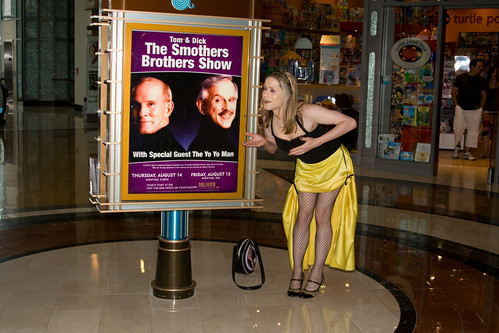
A man after my own heart.
My favourite Harry Nilsson song is "Spaceman." It encompasses every element of the '70s music I grew up with: pretentious orchestra, soaring melodies, thumping drums, and over-the-top production. I distinctly remember hearing the vocal effect during the "round and around" portion and realizing -- for the first time -- that music could contain UNNATURAL sounds. Thus began my love affair with the phaser.
Wow, he could sing. Wow, he could write a song. Here's a downbeat performance of "1941," which ends with all the pathetic oddness you'd expect from the man.
It seems that Nilsson is LEAST known for the songs he performed and wrote himself. His most famous song is probably "Without You," which he didn't write (and which Mariah Carey butchered in a most predictable way), and other bands have gone on to make hits out of his own songs which failed to chart. There aren't a lot of convenient clips of Nilsson's later work available on YouTube, so instead I'll show you the most wonderful rendition of a Nilsson song I can think of: it's Davey Jones performing "Daddy's Song" (from the Monkees movie "Head," which is brilliant and deserves its own post). Ten points and a smooch if you can tell me who he's dancing with.
Yes, it's Toni Basil. THAT Toni Basil.
Anyway, back to Harry Nilsson. The fact is that Nilsson made some crappy albums; he was messed up and unrestrained and his bosses didn't know how to market him. And yet somehow his troughs accentuate his high points; to love Nilsson it helps to know a bit about him, and what he could AND couldn't do.
Albums to buy: The two-disc reissue of his first two albums ("Pandemonium Shadow Show" and "Aerial Ballet") plus the world's first remix album ("Aerial Pandemonium Ballet") is pure, uncut, enthusiastic young spunk. "Nilsson Schmilsson" gives you the slightly drug-addled, crazier Nilsson (and "Coconut"). Albums to avoid: I'm not a fan of "A Little Touch of Schmilsson In The Night," and I've never picked up those albums that have been widely panned because I've never seen them for sale. For fans only: I wish I knew, because whatever it is I'd buy it.
There was a certain joy that came from singing nasty songs that were part of my parent's record collection. How could they discipline me when they'd bought those albums themselves? But as I grew older I started listening to the OTHER songs on those Harry Nilsson albums, and I realized that the world didn't view him as the writer of cheap novelties; he was a troubled genius who hit as often as he missed, who swam in garbage and fished up jewels, who went on a mad drinking binge with John Lennon and was ejected from a bar for heckling The Smothers Brothers.
A man after my own heart.
My favourite Harry Nilsson song is "Spaceman." It encompasses every element of the '70s music I grew up with: pretentious orchestra, soaring melodies, thumping drums, and over-the-top production. I distinctly remember hearing the vocal effect during the "round and around" portion and realizing -- for the first time -- that music could contain UNNATURAL sounds. Thus began my love affair with the phaser.
Wow, he could sing. Wow, he could write a song. Here's a downbeat performance of "1941," which ends with all the pathetic oddness you'd expect from the man.
It seems that Nilsson is LEAST known for the songs he performed and wrote himself. His most famous song is probably "Without You," which he didn't write (and which Mariah Carey butchered in a most predictable way), and other bands have gone on to make hits out of his own songs which failed to chart. There aren't a lot of convenient clips of Nilsson's later work available on YouTube, so instead I'll show you the most wonderful rendition of a Nilsson song I can think of: it's Davey Jones performing "Daddy's Song" (from the Monkees movie "Head," which is brilliant and deserves its own post). Ten points and a smooch if you can tell me who he's dancing with.
Yes, it's Toni Basil. THAT Toni Basil.
Anyway, back to Harry Nilsson. The fact is that Nilsson made some crappy albums; he was messed up and unrestrained and his bosses didn't know how to market him. And yet somehow his troughs accentuate his high points; to love Nilsson it helps to know a bit about him, and what he could AND couldn't do.
Albums to buy: The two-disc reissue of his first two albums ("Pandemonium Shadow Show" and "Aerial Ballet") plus the world's first remix album ("Aerial Pandemonium Ballet") is pure, uncut, enthusiastic young spunk. "Nilsson Schmilsson" gives you the slightly drug-addled, crazier Nilsson (and "Coconut"). Albums to avoid: I'm not a fan of "A Little Touch of Schmilsson In The Night," and I've never picked up those albums that have been widely panned because I've never seen them for sale. For fans only: I wish I knew, because whatever it is I'd buy it.
The REAL Hallowe'en Horror
When I prepare for Hallowe'en I'm not worried about some kid in a Harry Potter mask stealing my soul...I'm just worried about what I'm going to wear. And that's a big worry.
For most of my life I didn't care about Hallowe'en. I couldn't think of any "good ideas" and I was far too insecure to be comfortable executing them anyway. It wasn't until young adulthood that I started thinking "Hey, this Hallowe'en thing is pretty fun!"
So for many years I planned out costumes that meant something to ME -- Ann Miller from "On The Town," a lion tamer, "Zev" from the TV series "Lexx," Naag ki Devi, Melody Valentine from "Josie and the Pussycats," and the bounty hunter from "Guitar Wolf" -- but in almost every case my costume was either incomprehensible to others or simply looked at as the sort of thing I wear anyway. And I learned by painting myself blue that I have a lot more skin than I'd thought I had.
This year I decided, to hell with it, I'd go out in a strikingly-obvious costume. But I don't feel like spending a ton of money on something I'm not passionate about, and the cheap pre-made costumes always LOOK cheap (and you're bound to run into three other people wearing exactly the same thing). Besides, off-the-rack is CHEATING.
I'd much rather just not wear ANY costume and simply go as me, but since people bar-hop on that particular night to show off their elaborate Transformer outfits, I always meet lots of new people, and they think that my being in drag IS a costume, which is annoying.
Monday, October 20, 2008
Mr. B.V.D. Beefcake, 1929
Maybe you think the Muffyblog isn't sexy enough? If so, here's your B.V.D. Beefcake from April 27, 1929.
 Love the smoking jacket and the elegantly rouged cheeks, and I bet he's reading a book by Oscar Wilde.
Something I learned when I began getting into the "vintage fashion" scene is that even though those clothes were the height of fashion at their time, we now associate them with our grandparents. When my grandmother wore bakelite jewelery she looked like a princess; if I wore it I'd look creepy.
Same goes for the B.V.D.s here, which surely were sexy for their time, but when I look at them all I can think of is my grandfather putting horseradish on his vegetables and singing "Barney Google."
It takes a special sort of somebody to cut through all those associations and still be sexy in vintage styles. And it also takes a special modification of said styles to make them a tad less modest.
Subscribe to:
Posts (Atom)